
What Makes Meta Muse Image Different?
Meta just launched Muse Image, its first in-house AI image generator. Explore features, availability, pricing, and how it compares to OpenAI and Google in this complete guide.
Introduction: Meta's Biggest AI Move of 2026
Imagine typing a simple sentence into a chat window and watching a photorealistic image appear seconds later, no design skills, no complicated prompts, no separate app needed.
That is exactly what Meta's new tool, Muse Image, promises to deliver. Built by Meta Superintelligence Labs (MSL), it is Meta's first fully in-house AI image generation model, and it is already rolling out across some of the world's most used apps.
This guide covers everything you need to know: what Muse Image is, how it works, where you can use it, and how it stacks up against competitors like OpenAI and Google.
- What Is Meta Muse Image
- Key Features
- Where You Can Use It
- Muse Image vs. Competitors
- Privacy Concerns
- What's Coming Next
- FAQs
1. What Is Meta Muse Image?
Muse Image is Meta's first proprietary image generation model, developed by Meta Superintelligence Labs. It builds on Muse Spark, the reasoning-focused language model Meta introduced earlier in the year, effectively giving Meta a unified AI stack that understands both text and visual content.
Rather than launching as a standalone app, Muse Image is embedded directly inside products people already use daily: Meta AI, Instagram, and WhatsApp, with Facebook, Messenger, and advertiser tools set to follow.
| Detail | Information |
|---|---|
| Developer | Meta Superintelligence Labs |
| Internal Codename | Mango |
| Predecessor Model | Muse Spark (language model) |
| Launch Date | July 2026 |
| Cost | Free (currently) |
| Platforms | Meta AI, Instagram, WhatsApp |
2. Key Features of Muse Image
| Feature | What It Does |
|---|---|
| Conversational Prompting | Understands plain, natural language instead of requiring precise prompt engineering |
| Reasoning-Based Planning | Works with Muse Spark to plan layout and composition before generating an image |
| Multi-Image Blending | Combines multiple photos or references into a single coherent creation |
| Real-Time Web Context | Pulls live information from the web, useful for redesigning rooms with real products |
| Markup Editing | Lets users sketch or circle directly on an image to request specific edits |
| Persistent Memory | Remembers the full conversation so you can refine a creation without starting over |
| Instagram Mentions | Allows tagging Instagram accounts to pull in public photos for personalized content |
| Preset Templates | One-tap presets for effects like restoring old photos or generating stylized avatars |
These capabilities also allow Muse Image to render details that older AI image tools often struggled with, including legible text, functional QR codes, and detailed infographics.
3. Where You Can Use Muse Image
| Platform | Availability |
|---|---|
| Meta AI App | Live now |
| Instagram Stories | Live now, powering 30+ new AI effects |
| Live in select countries | |
| Coming soon | |
| Messenger | Coming soon |
| Advertisers (Advantage+) | Rolling out in the coming weeks |
For advertisers specifically, Meta says the model will help generate on-brand ad variations with fewer manual iterations, a feature likely to appeal to marketing teams and agencies.
/socialsamosa/media/media_files/2026/07/08/14-1-2026-07-08-11-43-14.jpg)
4. Muse Image vs. Competitors
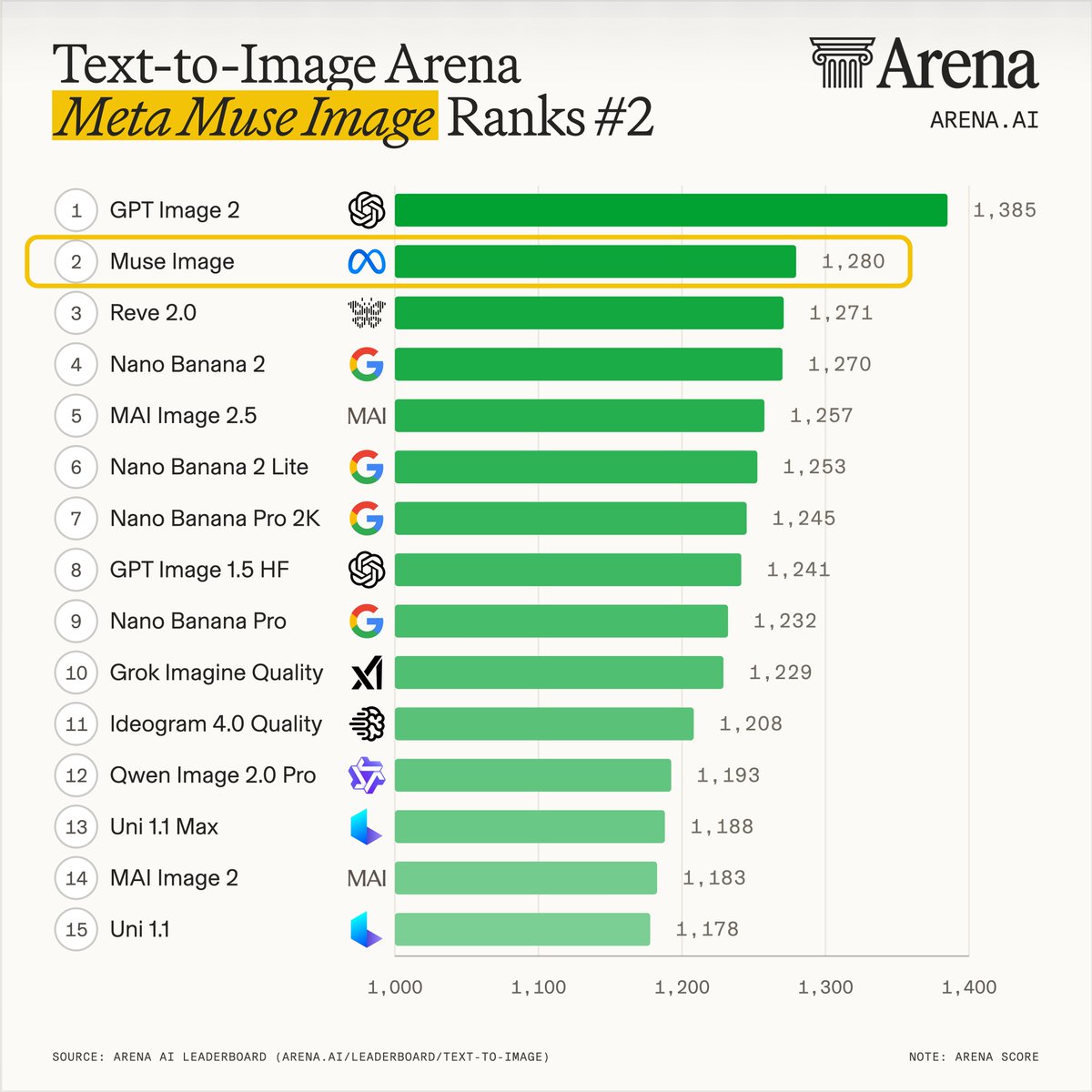
According to Meta's own internal benchmarks, Muse Image currently trails OpenAI's latest image model in overall quality, but it outperforms Google's Nano Banana 2 specifically on editing tasks.
| Model | Strength | Positioning vs. Muse Image |
|---|---|---|
| OpenAI's latest image model | Overall image quality | Ahead of Muse Image |
| Google Nano Banana 2 | General image generation | Behind Muse Image on editing |
| Meta Muse Image | Native app integration, conversational editing | Positioned as the "convenience" option |
This launch also allows Meta to phase out third-party image tools it previously licensed from providers like Midjourney and Black Forest Labs, giving it full control over its creative AI pipeline.
It is worth noting that Muse Spark, the reasoning model behind Muse Image, is still considered behind rival language models from other AI labs. This suggests Muse Image is a strong first step rather than a category-leading product just yet.
5. Privacy Concerns Worth Knowing
Not everything about the launch has been positive. The feature that lets users @-mention Instagram accounts to pull in someone's public photos has already drawn criticism, with some users uncomfortable about their images being used this way without direct permission.
Meta says account holders can opt out of having their photos used in this feature. If privacy is a priority for you, it is worth checking your account settings after this update rolls out.
6. What's Coming Next
Meta has confirmed that a video generation model, Muse Video, is already in development and expected to arrive within months. This points toward a future where Meta AI can generate text, images, and video from a single unified system.
The company has also indicated it is working on a more powerful successor to Muse Spark, one that will require significantly more compute power than the current model.
Final Thoughts
Muse Image is not just another AI experiment from Meta. It represents a strategic shift toward owning the entire creative AI pipeline across its apps, from chat to Stories to advertising. While it is not yet the most powerful image model on the market, its deep integration into apps used by billions of people makes it one of the most accessible.
If you already use Meta AI, Instagram, or WhatsApp, it costs nothing to try it today. For advertisers and creators comparing tools long-term, it is worth treating this as version one of a product Meta is clearly planning to expand quickly, especially with Muse Video already on the way.