
ImagineArt vs Higgsfield 2026: Complete Feature, Pricing, and Review Comparison
The complete ImagineArt vs Higgsfield comparison for 2026. Every major feature covered: image and video generation, camera control, character consistency, pricing, the new Chatly and Supercomputer agent layers, and real user reviews.

Both of these platforms have grown a lot since the last time most comparison articles were written about them. This is the full picture: every core feature, every major 2026 addition, real pricing, and real reviews, organized so you can see exactly where each platform wins and where it doesn't.
1. Image Generation
ImagineArt runs on a wide model roster: its own proprietary ImagineArt 2.0, plus third party access to Flux, Imagen 3, Ideogram, Nano Banana Pro, and GPT Image 2. ImagineArt 2.0 specifically is the platform's newest and strongest model, reporting a 96 percent prompt accuracy score, about 20 points above the previous ImagineArt 1.5. Its standout strength is text rendering. It handles Latin, Arabic, CJK, Devanagari, and Cyrillic scripts correctly inside a single image, which remains a genuine weak point for most competing image generators. It also holds character and object identity across separate generation sessions now, useful for storyboards and branded product series without a dedicated fine tuning step. Independent reviewers consistently praise the realism of ImagineArt's portraits and product shots, with one review noting client work generated on the platform was mistaken for studio photography. The recurring criticism across multiple independent sources is occasional artifacting on complex scenes and inconsistent results when a prompt gets very specific.
Higgsfield treats image generation as a supporting feature rather than its main event, built around its Soul model for photorealism. Soul is praised in community feedback for lighting, material, and mood quality, and it feeds directly into Higgsfield's video pipeline so a generated image can become an animated clip without leaving the platform. Higgsfield doesn't offer the same breadth of dedicated image styles ImagineArt does (illustrative, typographic, anime, and so on all live natively inside ImagineArt), because image generation here exists mainly to feed the video tools.
Verdict: ImagineArt wins on breadth, model variety, and text heavy image work. Higgsfield's image output is solid but exists to support its video generation, not to compete as a standalone image tool.
2. Video Generation
ImagineArt's video generator supports text to video and image to video across Veo 3.1, Kling 3.0, Seedance 2.0, PixVerse v6, Wan 2.6, and Runway Gen 4.5, with tiered credit costs so you can choose based on budget or quality needs. WAN 2.2 costs around 30 credits for a quick draft, Seedance 1.5 Pro costs about 72 credits for mid tier output, and Google Veo 3.1 runs about 900 credits for premium cinematic results. New models get added to the roster regularly without requiring a plan upgrade.
Higgsfield aggregates 15 or more video models including Sora 2, Veo 3.1, and Kling 3.0, alongside its own DOP and Seedance 2.0 based pipeline. This is genuinely Higgsfield's home turf. Independent reviews consistently rank its cinematic quality highly for short, controlled shots with strong depth of field, and one review specifically found first generation output noticeably better than competing tools on a simple dolly shot test. The tradeoff shows up on complex, multi character action scenes, where at least one independent stress test scored motion consistency around 3.6 out of 10, and character consistency across shots remains a known limitation without careful use of Soul ID.
Verdict: Close, but Higgsfield edges ahead for pure cinematic video quality on well directed, simpler shots. ImagineArt is more consistent across a wider range of use cases and doesn't fall apart as noticeably on complex scenes.
3. Camera Control and Cinematic Direction
This category isn't close. Higgsfield's Cinema Studio gives you 50 or more named, professional camera presets, dolly pushes, crash zooms, 360 degree orbits, crane shots, whip pans, applied before generation rather than described in a text prompt and hoped for. An AI co-director called Mr. Higgs takes a written scene description and breaks it into a structured shot list with suggested framing and pacing, which you can accept, edit, or override entirely. Multiple independent reviewers describe this as unmatched among AI video tools, giving creators genuine directorial control rather than prompt guesswork. The learning curve is real, and combining two camera moves in a single clip tends to cause instability, but for anyone who thinks in terms of actual camera language, nothing else on the market currently matches this.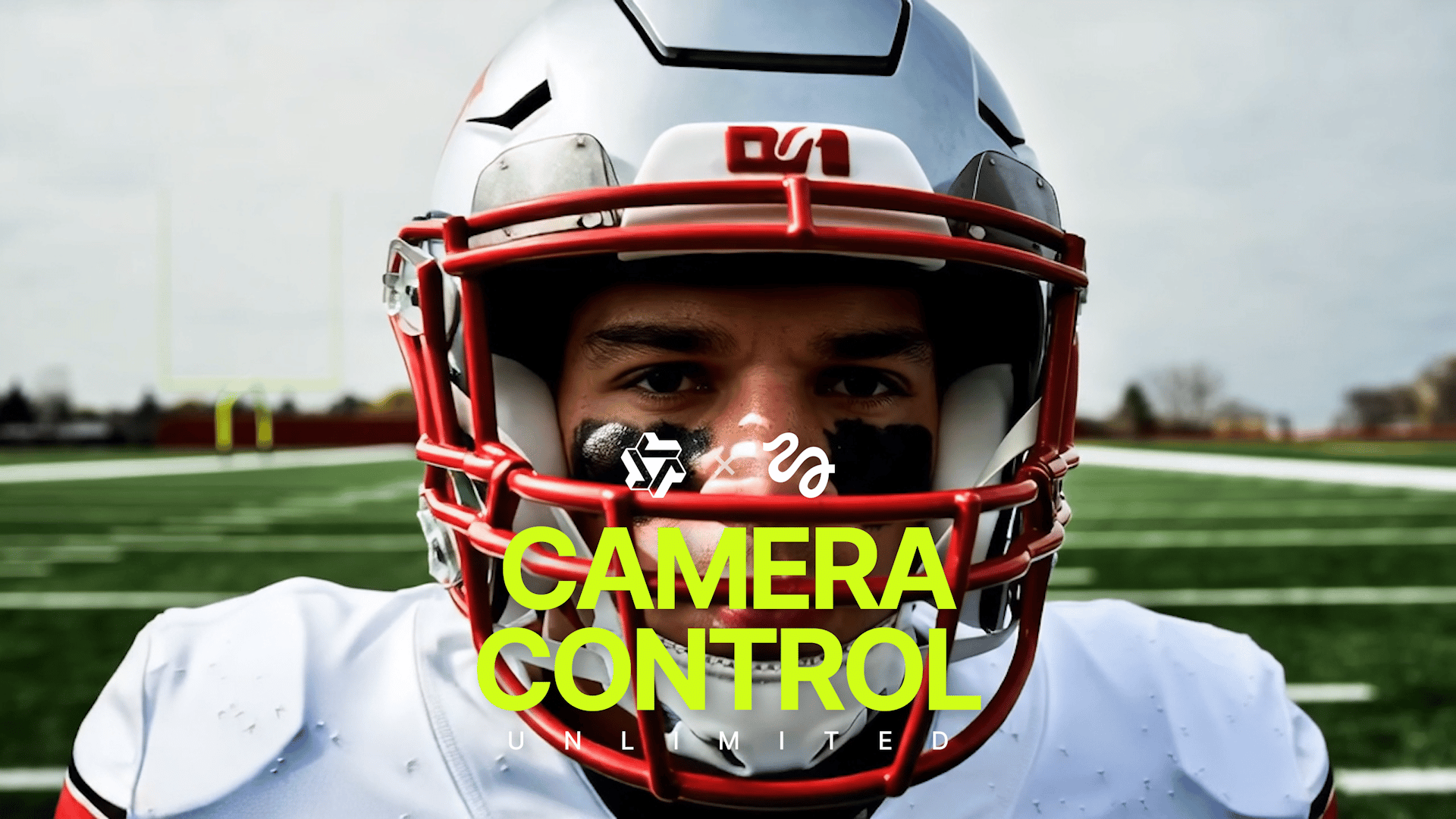
ImagineArt relies on prompt based framing and aspect ratio selection rather than a dedicated camera control interface. You can specify camera angle and lighting inside a prompt, and ImagineArt 2.0 treats those details as fixed constraints rather than suggestions, but there's no equivalent to Higgsfield's named preset library or shot list breakdown.
Verdict: Higgsfield, decisively. This remains its clearest, most defensible advantage.
4. Character Consistency
ImagineArt offers Personalize Character and Imagine You, letting you train a custom reference from multiple images and reuse it across generations. Higgsfield offers Soul ID, which serves the same purpose but is more tightly integrated with Cinema Studio, so a trained character maintains identity across multiple camera angles and shots within the same cinematic sequence. Both systems work; Higgsfield's is more purpose built for maintaining a face across a multi shot video sequence specifically, while ImagineArt's is more flexible across image, video, and product series work generally.
5. Editing, Upscaling, and Post Production
ImagineArt bundles background removal, image and video upscaling, an AI Image Editor for refining outputs without switching tools, and an App Builder that turns any workflow into a shareable, team ready application. Its node based Workflows feature lets you chain multiple models together (generate an image, animate it, upscale it, export it) as a repeatable pipeline, which is genuinely useful for teams producing the same type of asset repeatedly.
Higgsfield offers Lip Sync Studio, Face Swap, and Kling Video Edit for adjusting elements like expressions or backgrounds after generation. Its editing tools are more narrowly focused on fixing or adjusting an already generated clip rather than building a repeatable multi step pipeline the way ImagineArt's Workflows do.
Verdict: ImagineArt for pipeline building and repeatable production. Higgsfield for post generation fixes on individual clips.
6. The New Chat and Agent Layer
This is genuinely new territory for both platforms in 2026, and it's worth understanding because it changes how you'd actually use either tool day to day now.
ImagineArt merged into Chatly, a multi model AI chat platform built on GPT-4o, GPT-4.1, Claude, Gemini, Grok, and DeepSeek. The practical result: you can now brainstorm, write, and generate images or video inside one continuous chat thread, switching the underlying reasoning model as needed, with ImagineArt's tools available directly inside that same interface for paid users. It's a genuine convenience upgrade, though Google Play reviews for the Chatly app include real complaints about misleading ad placements and difficulty getting refunds on accidental sign ups, worth knowing before you subscribe through an ad link.
Higgsfield shipped Supercomputer, a considerably more ambitious agentic layer. Instead of a chat window that has access to generation tools, Supercomputer is an agent that plans and executes an entire production. Type "make a TikTok for my sneakers," and it writes the brief, picks the right underlying models automatically, shows you the credit cost before rendering, and delivers a finished asset. It's built on Higgsfield's Seedance 2.0 model, a fine tuned version of the open Hermes Agent for orchestration, and a three layer memory system intended to learn your brand preferences over time. A follow up release, Supercomputer 2.0, narrows this into an autonomous marketing agent for Team and Enterprise plans, with a case study claiming a skincare brand generated 100 ad variants per product in minutes. Higgsfield's own demonstration of how far this can scale is Hell Grind, a 23 minute sci-fi pilot produced in 96 hours using the same underlying stack.
Both companies also shipped MCP (Model Context Protocol) support this year, letting external AI agents like Claude reach their generation tools directly. Higgsfield's MCP server launched April 30 and is clearly the more mature of the two, exposing 30+ models through a single connection that works with Claude on web, Cowork, and Claude Code. ImagineArt's MCP is still in beta as of this writing.
Verdict: Higgsfield has built the more advanced agentic layer, and it's a meaningful gap right now. Chatly is a genuinely useful convenience feature for ImagineArt, but Supercomputer is a different order of automation entirely, planning and assembling full productions rather than just providing chat access to existing tools.
7. What's Actually Trending Right Now
If you're checking in on either platform for the first time in a while, here's what's getting the most attention this cycle. On Higgsfield's side, Supercomputer and its viral Hell Grind case study are the story everyone in the AI video space is discussing, alongside the Higgsfield MCP integration, which has become a popular way for developers to pull cinematic quality video generation directly into Claude based workflows without touching a separate app. On ImagineArt's side, the Chatly merger and ImagineArt 2.0's text rendering improvements are the headline items, along with its growing library of one click Apps and ad creative templates aimed specifically at marketing teams running high volume campaign variations.
8. Pricing
Both platforms still run on credit systems that shift regularly, so confirm current numbers on the ImagineArt pricing page and Higgsfield's pricing page before budgeting.
| Plan tier | ImagineArt | Higgsfield |
|---|---|---|
| Free | 100 daily credits, no watermark, no card required | 10 to 70 monthly credits depending on source, watermarked, one job at a time |
| Entry | ~$13/mo for around 3,000 credits | ~$5 to $15/mo for around 70 credits |
| Mid tier | ~$30/mo, roughly 1,000 images and 125 videos | ~$39 to $49/mo, unlocks Cinema Studio and Mr. Higgs |
| Top tier | ~$50/mo for 16,000 credits, built for volume production | Up to $249/mo |
| Chat layer | Chatly Standard advertised as low as $7.50/mo on annual billing | Supercomputer and MCP draw from existing platform credits, no separate bill |
The credit math still favors ImagineArt for volume and Higgsfield for quality per premium clip. Premium Higgsfield models like Sora 2 and Veo can cost 40 to 70 credits per clip, and most creators need several regenerations before a usable take, so a lower tier plan disappears fast if you lean on top tier models. ImagineArt's shared credit pool across image, video, music, voice, and now Chatly keeps its consolidation argument strong against running three or four separate subscriptions elsewhere. One important billing note: in late 2025, a number of Higgsfield users reported the checkout flow defaulting to annual billing when they intended to pay monthly, generating over 1,000 negative Trustpilot reviews. Check your billing cycle carefully at checkout.
Head to Head, Feature by Feature
| Category | ImagineArt | Higgsfield |
|---|---|---|
| Chat driven creation | Chatly: multi model chat (GPT-4o, Claude, Gemini, Grok, DeepSeek) with integrated image, video, editing tools | Supercomputer: agentic chat that plans, generates, and assembles full campaigns end to end |
| Reasoning model choice | Switch between major LLMs for ideation and copy inside Chatly | Swap the agent's driving model between GPT-5.5 Pro, Claude Sonnet, Claude Opus 4.6, Gemini 3.1 Pro |
| Proprietary generation model | ImagineArt 2.0, 96% reported prompt accuracy, strong multiscript text rendering | Soul and Cinema Studio for photorealism and camera control, Seedance 2.0 for video |
| Automation depth | Node based Workflows for repeatable pipelines | Full autonomous production: script, cast, scene, edit, publish in one flow |
| MCP support | ImagineArt MCP, currently in beta | Official Higgsfield MCP, live since April 30, 30+ models, works with Claude, OpenClaw, Hermes Agent |
| Marketing automation | AI Workflows, App Builder, ad creative templates | Supercomputer 2.0, autonomous marketing agent for Team and Enterprise, built on NVIDIA's Agent Toolkit |
| Best documented public case study | Consolidation savings vs running Runway, Pika, and Sora separately | Hell Grind, a 23 minute pilot produced in 96 hours |
| Camera control | Prompt based framing | Cinema Studio, 50+ named camera presets applied before generation |
| Character consistency | Personalize Character / Imagine You | Soul ID |
9. Real User Reviews
Higgsfield scores consistently in the 7.8 to 8 out of 10 range across independent hands on reviews, with camera control cited as the standout feature in nearly every writeup and motion consistency on complex scenes as the recurring weakness. Reviewers who tested Supercomputer specifically describe it as feeling like directing a production assistant rather than prompting a model, though several noted its "self-learning" memory feature is still largely manual entry at this stage rather than fully automatic.
ImagineArt holds a 4.2 out of 5 average on G2 from verified business reviewers, with speed, ease of use, and subscription consolidation as the most repeated praise. A three month G2 reviewer specifically credited the all in one approach with replacing several separate tool subscriptions entirely. The most common complaint across independent reviews is interface friction from pop ups and promotional prompts, not output quality, and Chatly specifically has drawn some Google Play complaints around ad based sign ups and refund handling.
10. Who Should Choose Which
Choose ImagineArt if you need image, video, music, voice, and general AI chat under one subscription, you're a solo creator or small team trying to consolidate multiple tool bills, or your priority is speed and breadth over frame perfect camera direction.
Choose Higgsfield if your work is specifically video and camera direction matters, you're producing branded, fashion, or cinematic content where shot composition is the point, or you want to hand an entire video production to an agent and review the result rather than assembling it piece by piece yourself.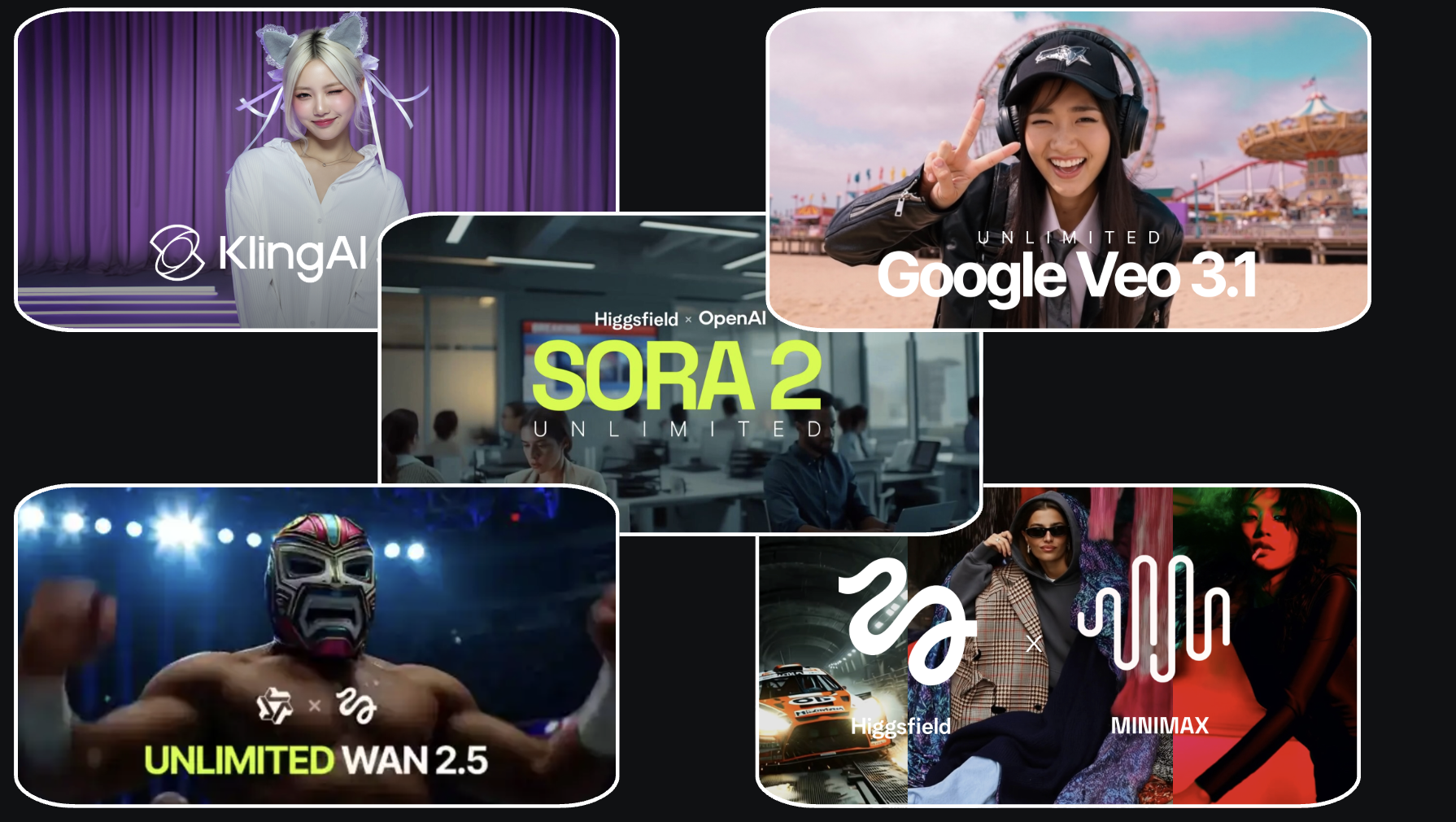
Consider both together if budget allows. A workflow several reviewers recommend uses Higgsfield for hero shots and full campaign automation through Supercomputer, paired with ImagineArt for supporting image assets, marketing variations, and the music, voice, and general chat work Higgsfield doesn't natively cover.
Bottom Line
ImagineArt and Higgsfield started as two very different bets, breadth versus depth, and 2026 made both bets bigger rather than resolving the disagreement. ImagineArt's Chatly merger extends its breadth into general AI chat and multi model reasoning. Higgsfield's Supercomputer extends its depth into full autonomous production. Neither platform has closed the gap on the other's core strength: ImagineArt still doesn't have anything close to Cinema Studio's camera control, and Higgsfield still isn't trying to be a one stop shop for image, music, and voice the way ImagineArt is. Pick based on which gap actually affects your work, not on which company shipped the flashier headline this month.
The Quick Answer
ImagineArt is the broader platform. It covers image, video, music, voice, editing, and general AI chat under one subscription, and it just got significantly wider with its Chatly merger. Higgsfield is the deeper platform. It does less overall, but what it does, cinematic video with real camera direction, it does better than almost anything else on the market, and it just got significantly more automated with Supercomputer. Neither claim has changed in 2026. What's changed is how far each company has pushed its own lane.